By Doctor June 2, 2026
Vanilla is one of the world’s most treasured spices, but not all vanilla beans are the same. Among the many species within the Vanilla genus, Vanilla Planifolia and Vanilla Tahitensis are the two most recognized in the global market. While both produce natural vanilla beans, they differ significantly in flavor, aroma, appearance, cultivation, and commercial applications.
Understanding these differences is essential for food manufacturers, chefs, importers, and anyone looking to select the right vanilla for a specific purpose. This guide compares Vanilla Planifolia and Tahitensis in detail to help you make an informed choice.
What is Vanilla Planifolia?
Vanilla Planifolia is the most widely cultivated vanilla species in the world and accounts for the majority of global vanilla production. It originated in Mexico but is now extensively grown in countries such as Indonesia, Madagascar, Uganda, and Papua New Guinea.
This species is prized for its rich vanillin content, delivering the classic sweet, creamy, and full-bodied vanilla flavor that consumers associate with premium vanilla products.
Because of its consistent quality and versatile flavor profile, Vanilla Planifolia is the preferred choice for commercial food production, baking, beverages, ice cream, chocolate, and vanilla extracts.
What is Vanilla Tahitensis?
Vanilla Tahitensis is a distinct species that is believed to have originated from a natural hybrid related to Planifolia. Today, it is primarily cultivated in French Polynesia, Papua New Guinea, and several Pacific islands.
Unlike Planifolia, Tahitensis contains lower levels of vanillin but higher concentrations of floral and fruity aromatic compounds. As a result, it offers a softer, more delicate flavor with notes reminiscent of cherry, anise, licorice, and tropical flowers.
Its unique aroma makes it particularly popular among pastry chefs, artisanal dessert makers, and the perfume industry.
Appearance Comparison
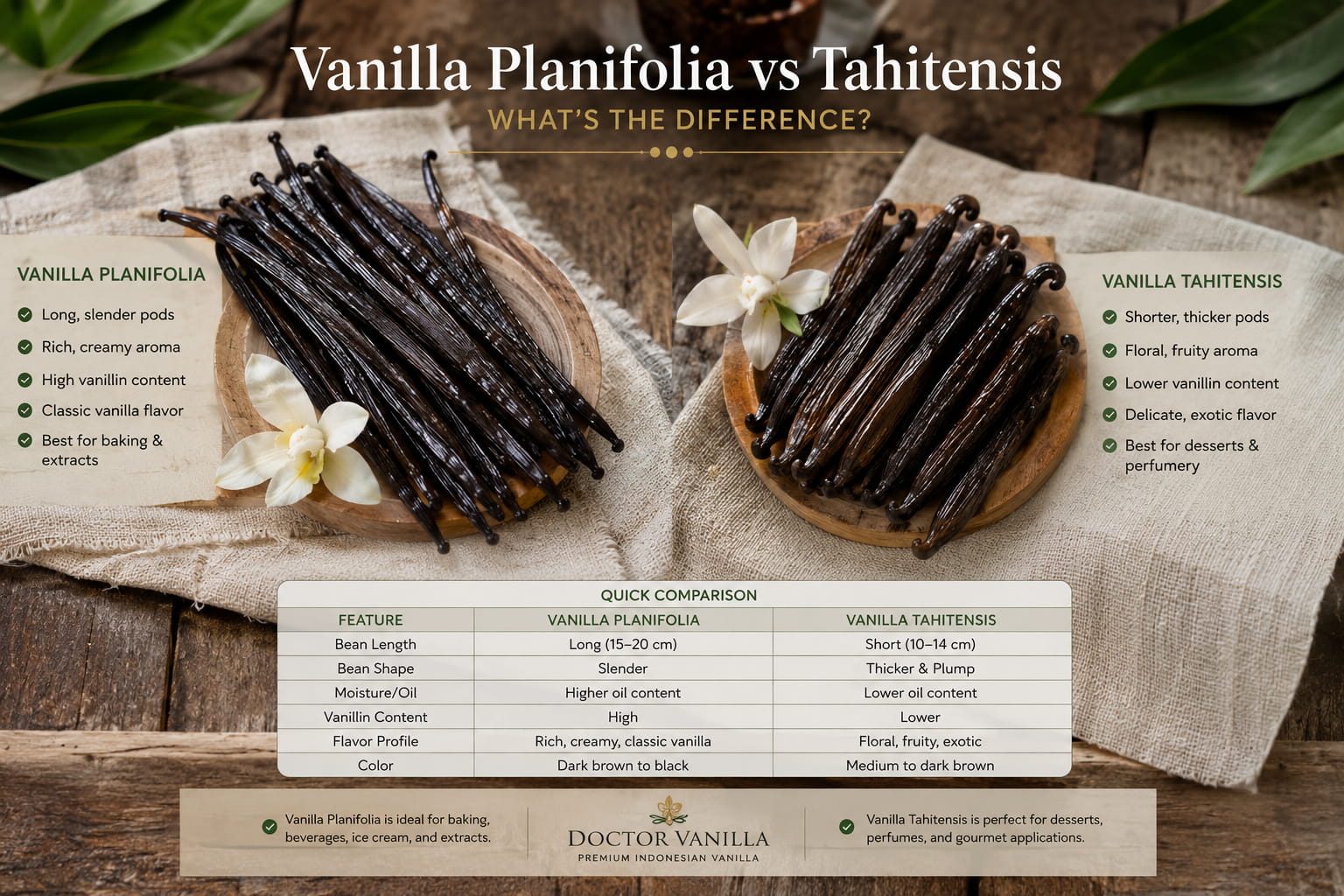
Although both species produce long, dark pods, there are noticeable physical differences.
Vanilla Planifolia
- Long and slender beans
- Dark brown to black color
- Oily surface
- Flexible texture
- Uniform appearance
Vanilla Tahitensis
- Shorter and wider pods
- Slightly thicker texture
- Less oily appearance
- Plumper shape
- Distinctive floral fragrance
Flavor Profile
One of the biggest differences between the two species is their flavor.
Vanilla Planifolia
Planifolia delivers the traditional vanilla flavor familiar to most consumers.
Characteristics include:
- Rich sweetness
- Creamy notes
- Deep vanilla aroma
- High natural vanillin content
- Balanced flavor
It works exceptionally well in recipes where vanilla is the dominant flavor.
Vanilla Tahitensis
Tahitensis provides a more exotic flavor profile.
Common tasting notes include:
- Floral aroma
- Fruity sweetness
- Cherry-like notes
- Anise hints
- Light caramel finish
Because of its delicate character, Tahitensis is often chosen for premium desserts and fine dining applications.
Vanillin Content
Vanillin is the primary compound responsible for vanilla’s characteristic aroma.
Generally:
- Vanilla Planifolia contains higher natural vanillin levels.
- Vanilla Tahitensis contains less vanillin but a wider range of aromatic compounds that create a more complex fragrance.
For products requiring a strong vanilla taste, Planifolia is usually the preferred option.
Growing Conditions
Both species require tropical climates, but they thrive under slightly different conditions.
Planifolia
- Warm temperatures
- High humidity
- Well-drained soil
- Partial shade
- Manual pollination
Tahitensis
- Tropical island climates
- Consistent rainfall
- High humidity
- Rich organic soil
- Hand pollination
Like all commercial vanilla orchids, both species require careful cultivation and labor-intensive harvesting.
Culinary Applications
Best Uses for Vanilla Planifolia
- Ice cream
- Cakes
- Cookies
- Chocolate
- Vanilla extract
- Dairy products
- Coffee beverages
Best Uses for Vanilla Tahitensis
- Pastries
- Custards
- Fruit desserts
- Premium chocolates
- Cocktails
- Fine dining desserts
- Perfumery
Which One is Better?
Neither species is objectively better. The ideal choice depends on the intended application.
Choose Vanilla Planifolia if you need:
- Strong vanilla flavor
- High vanillin content
- Consistent performance in baking
- Commercial food production
- Premium vanilla extract
Choose Vanilla Tahitensis if you prefer:
- Floral aroma
- Delicate sweetness
- Gourmet desserts
- Artisan products
- Luxury culinary experiences
Why Indonesian Vanilla Planifolia is Popular
Indonesia is one of the world’s leading producers of Vanilla Planifolia. Indonesian beans are highly regarded for their rich aroma, competitive pricing, and consistent export quality.
Many international buyers choose Indonesian Vanilla Planifolia because it offers:
- Excellent flavor development
- Reliable supply
- Flexible grading options
- Suitable moisture levels
- Compliance with international export standards
These qualities make Indonesian vanilla an ideal ingredient for manufacturers, wholesalers, and global food brands.
Looking for premium Vanilla Planifolia beans for your business?
Doctor Vanilla supplies export-quality Indonesian Vanilla Planifolia for food manufacturers, distributors, wholesalers, and international buyers. Contact our team today to request product specifications, pricing, or samples tailored to your sourcing needs.